Jonathan: 00:00
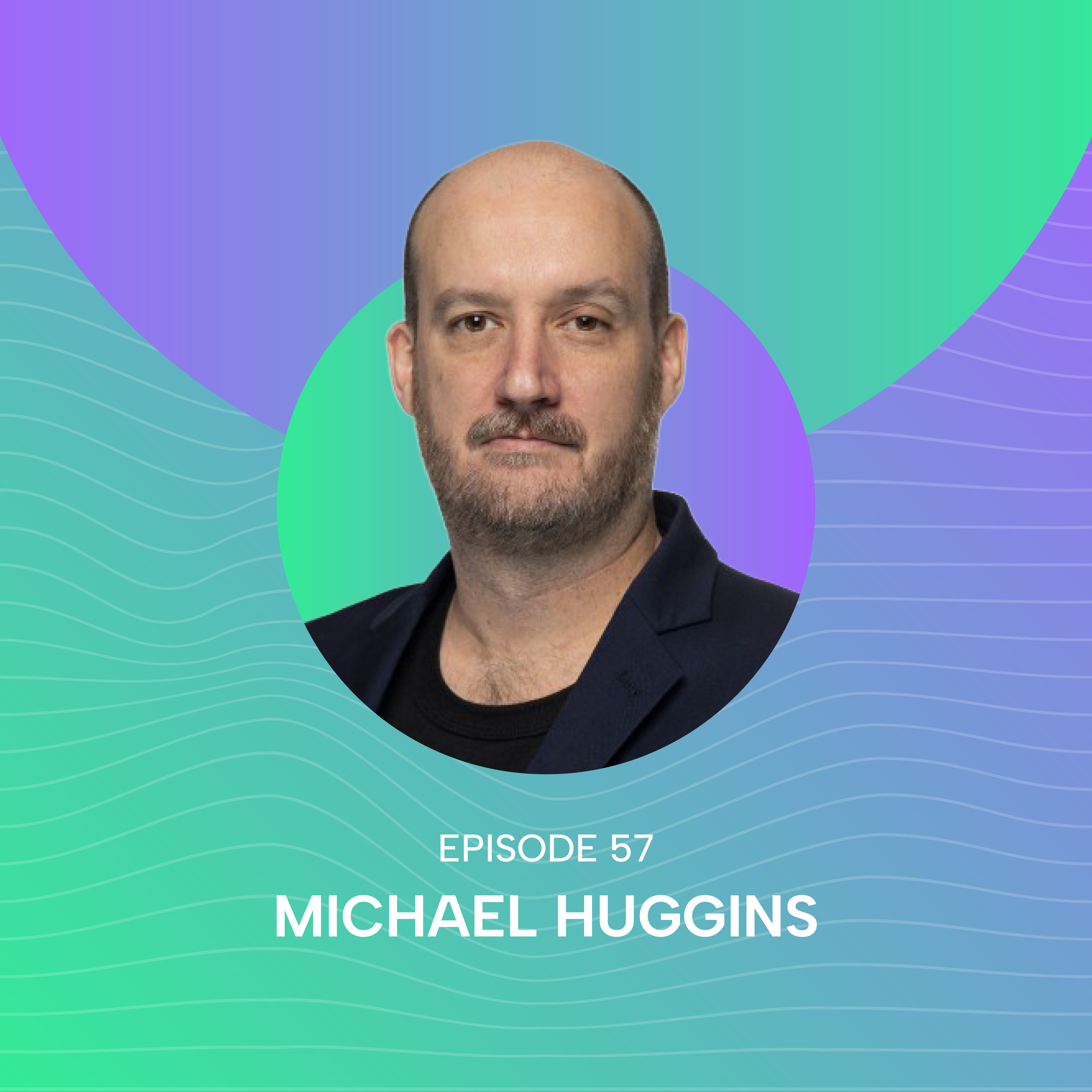
Hello and thank you for joining. I'm Jonathan Clues, CEO and founder of Student Bridge. Today we are in episode 57 of our Fill in Seats podcast. I've got a very special guest, is Michael Huggins from UW Stout. Hello, Michael. Hi, Jonathan. Thanks for joining today. And um look, we're gonna be talking about uh how University of Wisconsin Stout brings its polytechnic ethos online through the intentional experience design. Uh Michael Huggins is uh is actually a returning partner of Student Bridge. We were partners once, and uh then he's back with us, and we're just delighted to have him as a partner to work through um and hit their enrollment goals. Um, you lead marketing and communications, including digital experience strategy at the university um as your strategic marketing officer. You um how long have you been at UW Stout, Michael? I feel like you've been there for a long time.
Michael: 00:49
I I actually haven't. I've only been here for three years, uh, had done 15 years in Chicago at a law school before I made way back to uh the Midwest.
Jonathan: 00:56
So it's a long time in higher ed, but uh at UW Stout for three years. So you like the winters, obviously, because you stay up north.
Michael: 01:03
Well, I wouldn't say I'd like them, but I'm in them and I accept them.
Jonathan: 01:06
Oh, there you go. Yeah, yeah. And you you live for the six weeks of summer. I'm in Atlanta, so when it when it gets cold, you must all laugh at us down here up there, because when it gets cold down here, we cancel school and do all kinds of we can't, but it's all very scary, the cold down here.
Michael: 01:19
100%. The other flip of the coin, of course, is that when you hit that humidity barometer that you guys are outside enjoying the sun and sitting out in the heat. Well, I'm usually sitting in the basement in the dark someplace trying to just stay cool.
Jonathan: 01:29
So let's talk a little bit about um UW Stout. I mean, you're the um Wisconsin's premier polytechnic university, a mission centered on applied learning and research. Um, and then with that, you focus on translating that hands-on real-world learning into authentic digital experiences. Well, tell me a little bit about kind of what that role entails with you and your team.
Michael: 01:50
Uh well, so for the most part, like what we we handle the entire ecosystem communication for the institution. So we're covering everything from the digital, which of course is the primary uh communication vehicle that we have at the moment, um, but also then handle PR, video, photo, um, communication across the board. So essentially we're tasked with uh looking at the institution's identity, where it's come from, and where we're going in the future. And that's really what I came on board to do was to take a look at the way that the university had been talking about itself, translate that into how we should be talking to our constituents, making sure to match up our opportunities with what they're looking for. And uh, you know, given the challenges and the um uh the headwinds I think that education is facing, at least at the moment, we're at a turning point. And that makes it all the more imperative that the institution itself really drills down into the specific opportunities that it makes available from that applied learning component, uh, as opposed to traditional or theoretical learning that happens at a lot of traditional four-year institutions.
Jonathan: 02:45
Yeah, it makes sense. And look, I mean, regardless of what the institution is, brand is so important for every institution. Um, you you've got to make sure your brand promise is clear from that first click through enrollment. So um, I would I'm gonna give you it sounds like a backhanded compliment, but it truly is a compliment in our scoping with you when we were um hoping to partner with you again. Um, you had very very clear, the reason why I was on the podcast today, very clear ideas, but quite innovative ideas as well, very interesting ideas. So I think that's refreshing as well. And you talk about the industry being at a turning point. What is it? And this is off script really, but what does it take to move this industry from laggard looking at print material and sending things out to just saying, listen, our audience, like any audience these days, is short in time and they've got digital devices at their fingertips all the time. You need to you need to give them an experience, you need to tell a story, you need to do it quick because otherwise they just move on. I think you're groundbreaking on this. I think you're doing a great job. So, what do you think it takes for the industry to move?
Michael: 03:43
Uh quite honestly, I mean, I think education in a lot of industries are kind of um respondent to you know other trade winds that are out there, whether it's coming from commercial or it's coming from you know regulatory bodies and things from that standpoint. I mean, it's you know, this is it's not surprising that we're we're encountering um uh a self-reflective moment to see where education goes in the future. Uh, I think this is one of the things that that really attracted me to Stout. I mean, like when I was at the law school before I came here, we focused a lot on pro bono services and providing um you know free benefits for folks that were uh uh confronting Section 8 housing issues or veterans' concerns or people trying to register an invention, but they simply didn't have the capital that a corporation does to launch that. So when I came here, seeing that students were having similar opportunities to kind of really do that physical work and that the institution hadn't really decided to lean into that ID and accentuate it, um, that's what I really wanted to come on board and do. And of course, coming out of COVID and this kind of heightened um awareness and reliance on uh digital environments and especially the digital experience, that's where I recognized that Stout had quite a bit of opportunity to move forward. Um it had, like many institutions, I think, in that rush to get online during COVID and kind of look deeply, got there. But then, you know, we we start to see this uh uh, I think this phenomenon where we're playing to play catch up to an entire generation that's lived itself online and trying to recognize, well, what does experience look that way as opposed to them coming to us? We now need to go to them. Um and I think that's one of the big mental shifts that's out there, especially as we go into the digital space. Uh and there's there's a real kind of tension point, I think, between um, on the one hand, real physical lived experiences, I don't think can be truly uh replicated or equaled by digital experience. The quet and it's a totally different environment. Um, so the question is how can you use digital, dynamic, livable environments to exceed the possibilities of print and static um to try to get as close as you can to entice people to come and take advantage of those physical experiences, especially when we're talking to a generation that, like I said, has kind of lived its life online. I mean, um, you and I are probably among the last to live in the free-range generations, you know, where we had carte blanche to go off in the world and do whatever we wanted our bikes until we kind of bike, yeah.
Jonathan: 05:57
Right. Get on a track.
Michael: 05:58
These days, you know, those uh those students that are coming up the generations behind are spending their times uh maximizing opportunity in open world video games, or they're looking through uh Pokemon Go, you know, AR and VR experiences. So I think it's that kind of familiarity and the fact that they've been living online that uh folks uh uh you know, like me that are a little bit older, we're still trying to play catch-up on how do we match the environment that students are are expecting while providing the ability to amplify that really out in the real world is where real connections, relationships, um, these things are all forged. You and I have the benefit of having started that before we went online. These students are online, we have to figure out some way to give them or to find those same experiences that they can accentuate in their careers.
Jonathan: 06:42
I founded my first online company in 2000, so 25 years ago. And I was talking to our new product leader yesterday, and he's 35 years old. And I said, Listen, I've been doing digital for longer than you can even remember back. I mean, like you know, you don't probably remember what it was like being nine, eight, seven years old. Um, I think he brought up a really interesting point as well. Some people uh um misunderstand student bridge sometimes, like, well, you know, we can't replace the on-person in person. We're never trying to. Our job, look, the in-person is always going to be if I can interview someone and meet them in person, if I can meet you for a coffee in person, versus I mean the in-person experience is always gonna be the gold, but you can't scale that very well. What digital allows you to do is have a lower, so that's the highest conversion, has to be in person. But 100 people at this can 10% conversion is 10 people. If you can contact and touch 3,000 people through digital and have a half the percent, uh you still beat in when it comes to outcomes. Outcomes are traffic versus multiplied by conversion equals result, and so I just see that as a very much we've we really find ourselves fitting into the journey. And one of my taglines is from online to on campus. We believe you've got to provide those students a seamless experience so that so that it becomes yeah, you're they're looking at five, ten, fifteen different institutions. How are you becoming a consistent voice so that they can digital trust? Like, how can they feel that next time they come to UW Stout? So let's have let's let's let's frame today though before we we go on half an hour in the interim. That's great. Um, look, programs that integrate project-based learning see up to 30% higher attention in the first two years. UW Stout's identities built on applied learning. Students expect to do, build, test, and create. So we're gonna talk and explore uh how you show that experience virtually in a way that feels real and uh true to the institution, authenticity, I guess we're talking about. So we'll start with the question here, Michael. Employers say 70% of early career candidates lack demonstrated hands-on experience, and I can feel that myself. Um experience the increase in the value of polytechnic institutions. Um, graduates from experiential programs secure jobs nine to 12 months faster than peers in lecture-only programs, which is huge. You know, when in this job, especially in the job market today, this is not the job market of three, four years ago. I mean, you you've got to you've got to fight for a job, 250 applicants for a job. Um, Stout's Wisconsin's um premier polytechnic university. What does this mean in 2025 as we move into 2026? How does it shape the student experience?
Michael: 09:16
Well, I mean, uh in answering that question, allow me the um the ability for a 30-second victory lap here on Stout. Um, I mean, the thing that's interesting about Stout is that it essentially has been polytechnic in operation since its founding in 1891. Uh, the institution was founded by a lumber magnet who uh was uh revered the arts and crafts movement and the idea of doing you know DIY, kind of the earliest DIY opportunities. Um he started a school here in Menominee, Wisconsin that was devoted to engineering technology and applied arts as a way to kind of prepare students for opportunities that went beyond theory. Well, we've been allegiant to that since the very beginning. So the idea that we're talking about this project-based learning, learning with one's hands, making sure that there's a direct connection between the work you're doing in your education and how it directly translates to careers, is what we've been doing all along. Um, the institution, when it joined the Wisconsin system in the early 70s, was immediately designated a special mission, was recognized as a special mission school by its very nature of its origins, and um has been essentially at least proclaimed to be a polytechnic, um, uh not in statute, but in in reference in in um uh within the news and and across the media from an identity standpoint since 2007. We've only recently become statute as a poly. But what's relevant about that, back to the career point you're talking about, is that um since the earliest pointed stout has been tracking graduate employment rates, we've been on, we've never been below 90%. That goes back to 1972, I think. And we haven't been um anything less than we've been near perfect for the last 15 years. I don't think it's been less than 98. So the the point is that that absolutely supports what you're saying and it talks to the value of it. I think what's different these days about uh what's changing is the fact that other traditional four-year schools that could um you know talk about the liberal arts experience are now starting to use that language. So this is where it really becomes imperative for Stout to use Student Bridge as a way to really accentuate or accentuate. And to your point, you use the word authenticity. I think that's the biggest thing for me at the end of the day, is how can we convey, not just to say that we're polytechnic, that's just to use the stats of 99% employed or 100%, you know, uh applied learning experiences where you graduate or any of those things. Those are great to have a broadcast number, but we're trying to create here is a relationship, and that's what Student Bridge gives us the ability to do, is to go further, not just with a photo or a text, but to create that journey you're talking about, where we're actually creating a relationship of information and a pathway where they can see not only the spaces on campus where they're gonna be doing work, but what the work is gonna be done within that. That's where that video really comes to convey that importance. Um, I mean, to me, I think the biggest challenge that a polytechnic like Stout faces is making sure to go deeper and more specific and being more distinct in its authenticity to make sure that it's not co-opted or viewed to be homogenized by other general language that we're seeing more and more like hands-on or career-ready. Like we're all doing that. But like, what does it really look like? And that's where Stout gets into um wanting to use a platform like Student Bridge to accentuate its relationship with Fortune 500 companies. We've had 125 employers, unique employers over the last five years. You know, so it's really in those proof points. Or the fact that, for example, we talked about those applied learning experiences. Well, that's the outcome, right? That the building point is the fact that labs on campus at Stout outnumber traditional classrooms by three to one. So that's where Student Bridge can really help, not just to say that, but to really show it. And I think that's the thing that helps to get closer to a real experience that if you can see it for yourself, ultimately now we have to figure out how can we create the digital version of getting your hands on to really see that value before you come here and you get to work on, you know, a hundred uh million dollars worth of robotics or work within additive manufacturing or these large concrete 3D printers in engineering or amazing those things.
Jonathan: 13:03
Yeah, the concrete three. So so look, I mean that thank you. Uh very it warns me when I hear that think people like yourself are saying, look, you know, you've got these, um it's not students, you've got corporations you need to communicate with. And and that's the excitement for me because look, at the end of the day, Student Bridge, what we've created here is a communications platform, it's a video-based communication platform based on the fact that people prefer to watch video than read. People can consume video much quicker and easier, which is what we do. TikTok's the number one website of the world. Even me across the old 50-something year old, or give my exact age away, 53. Um, even I scroll through my social media feeds when I get a few minutes break of stop on the video. Um, you know, so it's just what we do, regardless of age, just video is appealing. And so I love hearing that the and this is something we could talk about offline, obviously, but love to work a way to help you communicate to those different audiences because I believe in audience content segmentation to make sure you get the right content to the right people. And so that's something one of the biggest challenges showing kind of that experiential campus in digital form. Um, traditional tools often fall flat, right? Or fall short, feel flat. Um, why is it so hard to capture that that experience, the polytechnic learning experience in digital spaces? Why is it proving difficult?
Michael: 14:18
Well, I mean, I think it's it's it's kind of things we've already touched on a little bit here, right? I mean, like in on the one hand, it's uh that theoretical um education, I think, can happen really anywhere, right? You can read a book anywhere you want to go. Hands-on education, especially applied education like we do, where we're actually trying to impact society and solve its problems through existing issues, is really you need tools to do that. We live in a world where it's not just a hammer and a nail anymore. We have to use um, you know, larger uh and more sophisticated pieces of equipment that interact with other systems of equipment to really accomplish uh you know large-scale impact. And I think that's um, you know, that's one of the things that a polytechnic that is difficult to see without being able to, you know, uh to have a solution like a digital solution if you can't get to campus, is that any institution can talk about, oh, you work in state-of-the-art labs. You know, this gets back to that specificity that I was talking about. It's like you can say that, or you can show equipment that you've never seen in your high school before that gives you a reference point that this is totally different. What goes even further to your point is that having videos where it literally diagrams students doing things showing exactly what they do. And then from our standpoint, again, that applied learning, showing exactly why that matters and how it'll have an impact. Um, that was one of the things that I keep going back to, you know, when I was a liberal art. I went to University of Wisconsin Madison, I admit that begrudgingly as a stoutie.
Jonathan: 15:37
But now we'll edit that bit later. Thank you.
Michael: 15:40
I appreciate that, Jonathan. But like, you know, I spent four years learning and enjoying what I learned, but having absolutely no idea how it applied, you know, and there wouldn't, there wouldn't have been anything that I can think of in my own mind on how they could have conveyed that through photo or video by showing the canvas the experience. I kind of had to stumble my way through that and find it, talk to a couple advisors, and maybe someday I'll figure it out. Students that come to Stout, I've when I first got here, I was hearing from students that in the first month were doing projects that had already been told that this project leads into the component of the next project that ultimately will get you to an internship. And then by the time you're getting close to graduation, you'll have interacted with three to four employers and you'll have done you know projects that will take you directly in industry. You won't be waiting to learn anything on the job, you're going directly in for the benefit of employers, which is why we have those relationships, as well as what happens on campus. So, how do you convey that? You know, I mean, again, that comes back to this is where I think platforms like yours, especially ones that are robust and it's not just a flat map, it's not just the Google View, um Street View, but it actually gives you the ability to interact. Um, that's how we can get into an experience where it feels like, oh, I brought you everything to the door. Now all you need to do is walk through ours and you'll have a chance to take advantage of all these opportunities. And to your point about the the corporate aspects, it's like I think that's that's also one of the aspects of um, and sorry, I'm doing a victory laugh and student bridge here too. Um but is you have opportunities through your products like Visa Tour, which is what we're one of the things that we're really excited about, to create different guided pathways for different constituencies. And I think that's a very, very unique thing that's out there in the moment that we're in. That's great.
Jonathan: 17:09
Um, okay, cool. We um well, you know, one last question before we take a break. Um a lot of universities out there, we see them. There's 4,000 something universities across the US, um, rely on maps or even static content, PDFs, to show what makes them unique. And I just feel it's ridiculous ridiculously archaic. Um, 87% of students actually in a survey say they decide whether to inquire after a viewing a dig college digital content. So it's the digital content that creates that connection to want to have an in-person experience or you know, part of the recruitment experience, even though it's an online course. Um more than 60% of Gen Z prospects, they say the online experience is their first meaningful impression of a college, which makes sense. In fact, I saw a stat that says 65% now of audience, no, it wasn't an age-related audience, but audiences now say the digital first impression is more important than the in-person. Because look, you buy a car, buying a house, buying anything, going to a restaurant. The research with your online creates that first impression. When you go, it's just there to either tick the box or fail you. So it's there, you've already created an expectation. What's what's Stout doing differently to address this?
Michael: 18:18
Oh boy. Um that's uh that's a really, really good question. I would say that like a lot of institutions, we are making that transition from the print experience or assuming that simply by broadcasting information it's enough to satisfy the expectations of students. Um, when I got here, I would say that we had an incredible amount of opportunity across the entire digital ecosystem to take it further, um, improving the website, our email conf flows, and obviously a critical, critical component being this visualization, not just of broadcasting the institution, but of what the experience is like in terms of the online map. So I think that was one of the first things I recognized was coming in. And again, how do you have a digital experience that isn't just digital in its medium, but is actually digital in its feel and experience? And I think that there's other products that have been out there, um, some of your competitors that we don't really need to name, of course, um, that are still producing a digital uh uh it's it's digital in its nature, but it still feels like a flat experience. Um and I would say that it's not a whole lot different than those maps. Like I view flat maps and communication, for example, as being something where it's really about the journey between locations instead of being about the locations themselves. We're walking along, we're looking, our interactivity with that piece is really about getting us from place one to place two. Um, the maps like what have been created, like yours and the interactivity and the ability to have these spots, it takes away all of the journey component of it, which is really the least important in my mind of getting from one location to the next, and it accentuates the value of those locations. It speeds up to the attention span and the expectation of the generation we're talking to, their ability to access information, and it focuses more so on we want. them to know about Stout rather than journeying from one place to the next. So I'm kind of jumping a little bit from print into digital here.
Speaker: 20:07
Yeah, yeah.
Michael: 20:07
But I do, I do want to make sure that I kind of accentuate that like the Google Street View, I think, is kind of exactly what I'm talking about. There's a number of maps that are built out there as being, you know, primary component. Things are evolved, of course, but this was you know dominant for a while. The Google Street View experience is you're clicking on, you have to click the arrow to get to the next place. You spend all of your time trying to get to the next location so you can access information. And to me, like I've already lost we know that every time we're expecting a click out of a user, we're losing people in that process. You've streamlined in terms of like part of our process was to try to streamline access to the information while maintaining the integrity of the experience they got when they got there. And that's why we made the choices we did in terms of the solutions.
Jonathan: 20:47
You kindly didn't name shame competitors and I think that the world there's some great competitors out there. So Student Bridge has always been friendly in the Veta network. But I've never got the Street View stuff. I mean that's why we didn't develop it ourselves. If I believed in a street view experience I'd have developed it. I didn't we didn't because as a user my I'm I'm a huge web user. I use the web for every decision I make in life. I'd never if rarely go on a street view. Why would I? I go to maps all the time I go to websites all the time but the street view if I'm looking to buy a house what does Street View even tell me it's like like if maybe it's a feature from 20 yeah it just doesn't do anything for me. It doesn't tell a story. And so I and also I believe there's an accessibility issue coming up maybe with some of the Street View stuff. Is that true?
Michael: 21:34
100% absolutely yeah yeah with the expectations that are coming down I think that's going to change a lot of um people that failed to innovate and kept and failed to keep looking for solutions while also um ensuring that every user um regardless of any uh impairment um had access to the same information like the people that have been paying attention to both the future and ensuring that all audiences have access are going to be the winners in the future for sure.
Jonathan: 21:57
And look again during our kind of courting period you were very strong on this you were very strong on making sure everything's accessible making sure that I mean it clearly was front of mind when you were choosing who to partner with so great let's take a quick break and we'll be back after the break to uh to take take our listeners and viewers through to the finish. So uh thank you guys have a quick break all right we don't see break but uh do you want to see are you happy going all right I'm more interested are you happy where it's going am I might answer the questions that you're looking for no you see you're you're articulate and it sounds smart and it's brilliant. So I'm obviously so what we've got now is we're going to talk experience now for now we're at 20 something minutes we can go we can go to about 3540 it doesn't have to be rushed um we've got about we've got more slides to do than we've done so we'll probably jump through it might skip some sections but were there any particular sections you wanted to hit or are you okay just to kind of rift through no I'm okay I'll just keep riffing I mean as long as it works for you and you guys are getting what you need out of the show then great. Okay all right well we'll we'll go back in okay welcome back to part two of episode 57 of filling seats I'm here with Michael Huggins of UW Stout we're talking about all kinds of things about the taking the polytechnic experience online to really drive quality um quality leads and prospects prospective students into the recruitment funnel but really about getting great outcomes about getting good students into the school and the college so they can have a best applied learning experience at this at the college university and then moving out um into the job world and then um with a good living wage and and off we go the dream um look experience is the differentiator we talked about it Michael we spoke about how experience can differentiate have you got any stats of how many other schools your prospective students are looking at when they're when they're deciding uh it really depends.
Michael: 23:48
So Wisconsin has a direct admit policy so um 10 of the schools in in the state operate underneath that so in some ways that's really ramped up the applications that have come in but it also ramps up the number of schools that students are looking at um those metrics we're looking at anywhere between I think three to five schools we also get a fair number of applicants from uh the Minneapolis area the Chicago region and those folks because they're not dealing with direct admit in the same way for Wisconsin um I think are in the roughly in the same territory about two to three to two to four schools looking at opportunities for sure.
Jonathan: 24:20
Yeah right so look important to stand out in those early early kind of information days where they're creating first impressions um we've found that digital experiences that highlight projects and applied learning um help stout stand out we've spoken about that um no surprise here I'm gonna talk about these stats in a minute mobile dominates 70% of the prospective students first interaction on a phone that probably doesn't surprise anyone what surprises people is on our stats when we get deeper into the relationship 80% are still done on a larger device. So while the relationship starts on a mobile when it gets serious it gravitates to a bigger device are you seeing I don't know if you're familiar with your own stats on the website do you see similar things with your.edu, how people deliver or kind of visit certain pages on different devices?
Michael: 25:08
Yeah it's um you know I I would I'd have to admit that I haven't done the deep dive on specific pages in a bit but I do look at the overall metrics in some of the major uh areas of the site pretty religiously the um our main site doesn't have this exact same amount of of mobile first traffic we're actually pretty close to equal um depending upon the year it's about 45 55 or it'll flips back the other direction um but in terms of conversions we're seeing the same things you're talking about uh you'll see an RFI submission coming through mobile but we see applications are coming through the full desktop experience there's just too many things to navigate uh to get into that but it's really you know that first impression to your point is about wetting the whistle making sure that they really can kind of see um the opportunity and once they know that then we know that we're they're gonna follow through especially after they've um you know experienced a uh an enhanced online experience or come to campus.
Jonathan: 25:59
I've got I for long I've held on um to it was anecdotal to begin with we proved it out with data that people gravitate to the larger device it's a big decision you want to lean forward you go type some forms in it's you know you don't you just want just the biggest it's a bit like watching a movie you try and gravitate to the biggest screen you've got mobile is just with us all the time but what was really interesting was I read a study um a couple of weeks ago that said actually when it comes to prospective students they also feel there might be um like small type they need to read or go you know that there's just a lot of information to try and take on and so doing that on your mobile even though you've got the fantastic eyesight of a of a younger generation person it's still difficult and so the bigger experience but of course you don't take the laptop to your to your in-person tour so we know that it goes back to a mobile for the in-person experience but students spend four times longer on interactive or video based content compared to static web pages and that's a big whip right I mean the the Forester research said one minute a video is worth a million words so if you're getting four times the staying power you're you're creating a relationship right so what any comments on some of any of this surprise you or is it exactly what you expect?
Michael: 27:06
It doesn't surprise me. I think the bigger surprises were when I first got to start seeing that we didn't measure up in the same way. We had seen a lot of program videos and I had looked at some metrics and this is from a number of years ago these you know it's it's laborious to maintain a video for every program and to look at especially if you're not seeing metrics. So we were seeing significantly lower metrics than I would have expected based on what you're talking about. I think that's part of the reason why we've taken a step back and we're trying to literally obliterate and rebuild the entire infrastructure is to it's not that we don't it's not that we would say that video doesn't matter. It's we're saying that video that we've created doesn't have the efficacy that we want it to and measures up to. So again here's another situation we're partnering with Student Bridge that as we've started to rebuild our identity internally on our video content and new outlines and leaning more into you know in some cases like 30 second sizzle reels to get stuff out faster, which is great to grab the attention now how do we then capture and maintain that attention through student experiences that feels relevant and not just kind of the same pad answers of my faculty or my professor gave me the skills I needed to succeed in my career. Like it's about from our end it's go deeper. What were the skills you learned? How are you using them? What are you doing? That's the differentiator for stout and I think that's you know all of these mediums are incredibly important but you have to use them effectively and if you don't they won't work for you and that's where we're at it's we don't challenge the medium we challenge our approach you're talking about you're talking about something I'm very passionate about look the the advent of TikTok and short form video and it's short shelf life attention grabbing it's kind of branding content.
Jonathan: 28:37
You're not trying to create a transaction you're not trying to create them into a funnel of information or of kind of decision making you're just trying to stay top of mind top of mind it's like drip drip drip drip drip and that content's very different because it has such a short shelf life it should have a production that's highly authentic and not you shouldn't invest a million dollars into each short form video that's gonna be live on live on the internet for six seconds of fame. Then you come to your flagship content something that we're working on with you that's when it becomes important because they're the hooks the short piece of content on social or wherever you're delivering it are the hooks. When they come to that UW stout site and they want now they're looking to learn about the institution now they're looking for a different experience they're not looking for jazzy sharp attention grabbing they're looking for slower more comforting authentic and reassuring um I see that you're really shifting yourself from information delivery to experience design what what's driving that? Is that just your beliefs is it just the data you're seeing or is it just seems like the right thing to do what's kind of driving that evolution it's all of it.
Michael: 29:39
I mean you know I'd have to admit that like as a marketer I um embrace a certain amount of creative chaos but I always try to gut check it with metrics and analysis at the end of the day. I mean I don't like to be hemmed in I'm a little bit iconoclastic my staff would say the same thing we're always trying to do something different and in some ways we've applied that same ethos to Stout that we want Stout in some ways to be kind of a slightly rebellious maybe even black motorcycle jacket wearing university within the system itself that that's the reason why coming back and looking at this major shift and going deeper and being more specific is so critical to us. And that's why partnering with um with your group on these videos to give us a chance to step back, see things that we maybe weren't seeing you understood what we were trying to go for. We know we're trying to go for we're just not quite sure we found the answers and that's where having this partner and shifting away from simply talking to people but creating relationships with them that then do acknowledge the expectations that come out of a TikTok environment but the same time add the and enhance with that additional kind of emotional and connective aspects the passionate aspects that come to it. Like that really is the thing I think that becomes difficult for education. It's like we have to meet students where they are in their expectations of what digital looks like and there's a certain level of sophisticated expectation about you know initial gloss and all the rest of that stuff. But there still is this need to like human beings have this desire to connect and be heard you know and to know that the things that they're worried about other people are worried about and that there's solutions to it and that they'll have support especially in environments where we're dealing with students that are still coming out of isolated periods of their lives with COVID. So I mean again coming back to your point yes from a from a communication standpoint about the identity of stout we're trying to be more specific not necessarily to to say that we're better than somebody else although of course we we would say that we are but simply to differentiate the opportunity and make sure that students have the available knowledge about what that opportunity is. But some of that is also knowing that they have peers that have gone forward and succeeded and they can see themselves in those same opportunities.
Jonathan: 31:40
That makes a lot of sense look um you know digital we've been we've been nosebleeding the the kind of the race into now like kind of just frontiering the race but it's it's the stats always back it up. I mean uh an email with video in it has three times the open rate uh a page with a web a video on it has a bigger you know a bigger sticky time as we spoke about um just even when it comes to typical campus maps or static tools they only see a 25% completion rate you make a guide experience for digital it nearly triples that to nearly 70% or over 70% so an experience is designed around outcomes which we've spoken about before not just locations I mean you don't you don't want to tore stop bus stop you want uh what does this what does this tour stop mean to me? What how is it going to impact my life while I'm studying and how is it going to help my outcomes I mean it improves the academic page engagement by 35%. So you know you you how does stout ensure it's digital experiences feel guided intentional authentic I mean how are you let me even ask that like moving from online to on campus and then you know personal versus digital this is a lot to navigate.
Michael: 32:47
Yeah I mean you know the the first you're right I mean and it was kind of like a nebulous uh you know bag of where do we start somewhat abstract like everything needs to be done but what gets done first. And I think what we started with was this idea that what we under what we know we could isolate was that 65% of students that come to UW Stout for a tour ultimately matriculate into the institution. Now there's questions about it with that's causation or correlation and were they going to come here ultimately or all along and they came here for a tour and we're in the process of you know really refining where are the moments where that decision gets made and if it's which one's chicken, which one's the egg. But the thing that we knew at the end of the day was this still has an impact. So we started from the standpoint of what's going to give us the opportunity to create a similar experience of what it's like to be on campus, to tour through various areas, to be drawn through very specific narratives and stories that you can be a passenger along, but then also be actively in the driver's seat about decisions you make to learn more about the institution, frankly without giving away the entire farm, right? We don't want the digital experience to be the exact same as the uh um the in-person experience and it can't like we acknowledged earlier but we do want it to be the breadcrumbs that get to somebody to a bigger aha moment after they've had an aha moment. So that's why we started with that tour and back ended into it knowing that um that there we had the visa tour product we could start looking at that then really gets into that. But then in order to have those locations we had to back it back up further. Where do we go on these spots that are the biggest aha moments for students when they're physically on campus? What are the things that get talked about in those moments and how do we take those conversations that are happening organically on campus, condense them down to concise and effective videos that then we use for the video view book that then backs itself back out to that map. So we kind of like reverse engineered literally everything of where we wanted to go to give ourselves the initial breadcrumbs and I'm not going to sit here and tell you we got it all figured out because we don't I mean like that's part of the iterative um change of society that we're responding to just when you figure it out it changes. Yeah yeah cool 100% right I mean and that's part of the fun right I mean like we in this department in in our Marcom department we function I think under a similar ethos as like improvisers do. We're always trying to do a yes and right there is like a no we don't do no buts unless we absolutely have to so everything here is okay that's a great idea how do we add something on top of it what's the thing to add on top how does that add more value how do we go deeper into the conversation and appear or convey the authenticity that we know is actually true. We don't make claims we don't chase other people's trends we simply try at the end of the day to convey the things that are unique about stout that are unfortunately a better kept secret than they should be and we're using the digital transition as a way to amplify that.
Jonathan: 35:20
Yeah I 100% agree with not giving away the farm on digital I mean you want to give it enough to be enticing and if they just felt like they'd seen it if they came in person it just felt redundant and repetitive that wouldn't keep the relationship growing and building um you said something else here though it is that kind of how do you kind of that aha the aha moment what what is required aha you know so we talk about the alignment between digital and in person like just you know there's got to be a certain aha digital and there should be a certain aha in person right and so how do you uh it the other thing I was going to say actually before we get to that data you mentioned yeah we we talked about as you kind of think think you figured something out the world changes and it has it's look how much that's happened over the last five years. Every time we think we figure something out something changes and so I would say that what one of the things that Student Bridge is now really getting on a good mission on for 2026 is data really need to start coming second again. See we all look at data as the holy grail or no I wasn't you didn't know some of your web stats. Why should you right I mean that's because that's just what's happened data's the rear view mirror and basically data quite often with a school will just tell you what you're doing is not working. So what we need to do is work on the experience and then you work on the experience to drive into existing data capture methods better outcomes because you owning something that says only three percent of people did something just tells you it's not working. What you need is great news we got the outcome 7% of people did something and so that's that speed of data to reaction is if you can look at your data and make quick but then you're too reactive so it's like we've got to balance this kind of looking in the rear view mirror at data with making good you're you're a marketing specialist you're a community you just know what feels right. I mean just sometimes you're just gonna go with feel and I've done a lot of the um we've done a lot in the um the world of neuromarketing and feel has a real place in this world you know you've got your primal brain and your and your rational brain feel is the fight or flight so if it feels right doesn't feel right don't do it go with your guts right um the rational brain is going to want to try and compute everything and do everything else but we need to like schools in my mind Michael that we need to have the industry move a little bit more away from just staring at data to the more common sense of listen create an experience get the results first then worry about the data and put people looking at the data too much in my mind just showing bad results is that something that how how have you protected your team from the analysis paralysis?
Michael: 37:53
I I mean I think that you're you're you're dead on and um I'm sure a lot of institutions are guilty of it but I I I don't think I'm out on a limb too far to suggest that public institutions suffer from it more than anything else. And that really is this bureaucratic sense that somehow data can be used to insulate us from from failure. And that's absolutely not the case to your point, right? I mean like data can be there to help us understand and to cross things or options off of a list when we experience failure, but it can't be the reason why we're holding ourselves back. And public institutions struggle with the idea of radical change. That's something I think that at Stout exists, but it's also something that the chancellor here has been very, very particular about stressing is that we need radical change. We need positive disruption it's happening all around us outside of the institution. It would be faulty for the institution to try to close its eyes and pretend that it can control everything that's within its borders without being impacted by anything that's outside of it. So my department is indicative of a number of departments around this institution that are trying to look at very very different ways of doing things whether it's challenging the amount of time it takes to finish a class whether it's challenging the modality or the ability to flow in and out of it whether it's um instead of going through multiple processes and committees can we accelerate change from the foundational levels of our employees having them bring up new ideas coming through us all of that ethos is baked in then to being part of a polytechnic and the idea that we really are future forward and technology you know leaning into technology so we have to use those tools to help accelerate into the next possibility. Yeah no and the the only way because there isn't metrics on the that new technology right in order to adopt and try things you simply have to suspend disbelief and see if at some point in time the data provides you a you know the ability to refine and to go a little bit one direction or another as you continue to trust in the things that you know to be true.
Jonathan: 39:49
I think that's the word trust I mean we we look how many relationships we enter in our life that aren't based on we haven't got the DeLorean to jump 20 years ahead and see what happened and then read the data. We've got to go with a bit of trust and we can Work on um certain data experiences, maybe experiences we've had, but but sometimes data can be misleading because you know bad questions asked at the front or bad experiences at the front will give you crappy data, and you you actually start. I'm a former race car driver. The worst thing you can ever do is not you know look at your data and just change the car. What you want to do is look at the data, change the car, go back to a baseline, see what you can't keep moving on top of yourself. You've got to kind of keep going back to a baseline.
Michael: 40:27
Um, well, think about I was just saying, just think about how many times that we look at data and we use it to simply reinforce the thing that we're saying. So, I mean, if that's the case, if we if data is open to so much interpretation that we can use it as uh essentially a false advocacy point, why don't we just advocate for the things we want to try and then see what happens afterwards from a more objective standpoint? Um or otherwise just keep data out of it entirely. Let's just try some new stuff and see what happens.
Jonathan: 40:50
Failure has got to be measure the outcomes. Yeah, I agree. Look, because outcomes are measurable. The data normally that we measure, I say data, you say data, but the data we measure is normally in-flow data, like how many track, how many people can decide, what they convert, what they do afterwards. You really need to measure just the outcome and move backwards. Like, did we enroll? Did we did we get X thousand applications? Did we enroll that many people? That's the true out because all the other data doesn't get anyone paid. It doesn't pay the bills. What pays the bills is the outcome that you're looking for. So look, let's move on to um, it's been great talking to you today, Michael. Thanks for making the time. Advice to other institutions. If you could guide other institutions, if someone's listening today and saying, look, I'm a little bit lost here. You know, you know, everyone has their own ideas, but Michael seems like he's put himself out there, taking some leaps of faith that I you know wish I could do. What advice would you give to bring their identity online? What would you advise?
Michael: 41:43
Oh boy, so much. Um, I guess I would say is, you know, fundamentally at its core, know who you are. Don't worry about chasing other people's institutional identities. Know who you are, do it better than other people. Um, if somebody's saying something that you think applies to your own institution, do a little introspection and find out whether or not that's something you're doing and if you're doing it differently. The other thing I would say is don't worry where you are right now in the digital process. Figure out where you want to go and listen to the students that you talk to the most about what they're experiencing and what they want to do, and then find the digital tools that give you the best leverage to communicate and to create a debt relationship. It's not always a one-size-fits-all. Um, and not every product out there is used the same way by every school. So find the things that authentically work for the institution, embrace the companies that provide those products and work with them directly with the same relationship you're establishing with your students. Establish that same relationship with your vendors and your partners. Um, use their expertise to get you where you're wanting going because no one goes there alone and no one gets there by themselves. So be dogged in your pursuit of the best experience for your students. Um, be demand uh the partnership uh and the best of all the people you work with, and don't give up until you get there. And truth be told, you'll never get there. So just keep going.
Jonathan: 42:59
That's right. Because look, when it like we said, when you get there, it's the game's changed and you've got to keep going. So it's it's a constant evolution, like like all of life. I mean, there's no blockbuster video for a reason, right? Is they they didn't evolve, they did they thought they had the market. There's no Sears and JC Petty, but yeah, anyone they could have done Amazon, right? Uh Blockbuster was perfectly situated to do Netflix. Um, they had all the relationships, they just didn't do it. So you know, you've got to keep evolving. Um something that we didn't pre pre-talk about, I'd love to bring in. But most of these to get this done in the best way possible seems to require different people within the institution with different hats. You need to pull the team together, get everyone on board. If you have some advice to some institution about how you succeeded in kind of getting everyone at UW stout rowing in the same direction on it, it's like, hey everyone, this is what I feel is important, let's get behind it, let's get going. Well, what how could you advise some of your colleagues of getting that kind of team background into it?
Michael: 43:58
Well, I mean, one of the things that I that you have to acknowledge, I think, is that every institution at various points in its year has different expectations upon it that then stretch people's resources and what's available to do one way or the other. Stout, because of the things we're trying to accomplish, is always under uh some compromise between the resources we have, um, when we decide to go home at the end of the day and leave things for the next day, and how um how much time our partners on campus have to participate in a process like this. What we did is what we were very deliberate about the idea that we know that small groups tend to work faster and more deliberately than others, um and that some individuals have more time to give than other people did. So we were very, very specific and deliberate about who we chose on campus, who we reached out to. And instead, what we came forward with was a plan, knowing that most people, when they're stretched in resources, feel more comfortable simply to be able to uh respond and say yes or say no, but and to change it than they are to come up with something in wholesale cloth. So when we started working with, say, for example, our interviewee prospects for the process with the um with the video view book for Student Bridge, we went with a list of people that we thought were the right people and asked them to either respond by confirming or to provide an alternative. That was what actually got us to the fastest point. And then we made sure that people understood that this wasn't just another university product or project. This was something that we were bringing in, a powerhouse team from outside, to help us record and it needed to become an institutional priority. And just like uh a process when you engage an outside um vendor for identity work or for communication or anything else, sometimes using an outside partner is exactly the leverage point you need to get people on board and to take it seriously. So use that and use student bridge the way you can to get through the project for sure.
Jonathan: 45:37
No, again, Michael, we've we've patted each other on the back today, and we've actually never met in person. I can't wait to, but um you you the victory laps are well well deserved. You you move through um strongly and author with authority, but with kind of good leadership. And I see that um it's gonna play you know when when we do these digital experiences for anyone, it it's a team effort to really get the people behind it because the more input you you just have this stronger story to tell and a better experience. So it's gonna be it's gonna be key as you go live. And so um, as we wrap up, let's have a closing reflection. The end of the year's coming, we're moving into 2026. Um, what gives you the most optimism? You mentioned that we thought that the you that the industry was pivoting or kind of maybe troffs out a little bit. We've had uh obviously some headwinds. What gives you optimism about the future of especially digital experience and applied learning across higher education? What's kind of giving you a smile as you're going through the holidays?
Michael: 46:32
Well, I think the thing at the end of the day that I reflect on is that more and more people are taking the importance of authentic authenticity as an institution seriously. Um, I think that that's what gives me optimism both for Stout, that as we continue down a path to refine and be more specific about the way we communicate the opportunities here, other institutions will do the same. And in some ways it's gonna be better for the consumer long term. Um, I think it's also going to be an issue that as we see even greater challenges to what's real and what's not, be it through AI-generated content or anything else that's out there, it's gonna really come home to define, I think, what the value of that authenticity and those real relationships that you create with your prospects are. Um, so I'm excited to see what new opportunities come up. I'm excited to see ways in which uh maybe obligatory, patent, and less effective processes and practices simply go away. Um, and I'm equally excited simply to see what students of the future bring to the table about their expectations that open doors that we couldn't conceive simply because um I'm I'm trying to catch up uh to the youth of today uh rather than holding on to the youth of my past.
Jonathan: 47:37
No, I love it. Thank you. Brilliant. Uh look, we I think we know that when institutions show their digital experience authentically, students make better choices, feel more prepared, they come in to the right school. We talk about fit. We haven't spoken about much today, but not everyone's a fit for UW stout. Um, and so but those that are, you need them to know about you. So it's kind of you don't want to be the best kept secret to the people that's a great match. Um, Michael, thank you very much. That was a great conversation. Uh, it's all we have time for today. Thank you for joining us. To our listeners too, thank you for tuning in. Um, hopefully you enjoyed the drive-in wherever you're going or if you're watching the videos. Uh, for more great content, please visit www.studentbridge.com. We have a resource page with white papers, podcasts, and webinars. And um, so hopefully there'll be some great content in there for you to uh think about as you're um enjoying yourselves over the holidays. And um again, thank you. See you all soon. Have a safe and happy holiday.
Michael: 48:32
Thanks, Jonathan.
Jonathan: 48:33
Thanks, Michael.