

Story First. Data Second. Students Always.
In this episode:
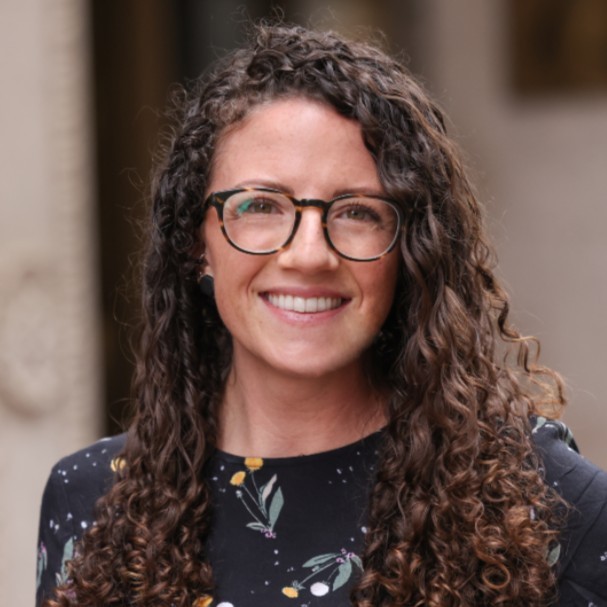
In this episode of Filling Seats, Jonathan Clues sits down with Amber Fitzgerald, Director of Enrollment Visitor Services at Suffolk University, to talk about how the campus visit experience has changed and why institutions need to think beyond the day a student arrives on campus. Amber shares how Suffolk is using digital resources, student stories, and post-visit engagement to create a more seamless journey for students and families.
The conversation explores why online and in-person experiences should work together, how authentic student voices help create emotional connection, and why data should be used to strengthen the story rather than replace it. Jonathan and Amber also discuss the growing role of short-form video, the importance of making students feel seen, and how visit teams can build excitement before, during, and after the campus experience.


Episode Transcript
Guests:
Jonathan Clues (Host)
Amber Fitzgerald
Overview: What This Conversation Covers
This transcript captures a conversation between Jonathan Clues and Amber Fitzgerald about:
- How the campus visit has evolved beyond a single on-campus moment
- Why pre-visit and post-visit engagement matter more than ever
- How Suffolk University thinks about digital and in-person visit experiences
- Why student storytelling plays such an important role in enrollment
- How data can support stronger, more personal engagement
- Why short-form video helps students feel prepared and connected
- How visitor services teams can align staff, student ambassadors, and leadership around the visit experience
Background: Amber Fitzgerald’s Perspective on the Campus Visit
Jonathan Clues:
Welcome to Filling Seats. Today we’re joined by Amber Fitzgerald from Suffolk University.
Amber, can you start by sharing a little bit about your role and what brought you to this conversation?
Amber Fitzgerald:
Sure. My name is Amber Fitzgerald, and I currently serve as the Director of Enrollment Visitor Services at Suffolk University in downtown Boston.
Suffolk has just under 5,000 undergraduate students, along with graduate and law students as well. I have been in higher education for about 15 years, and my work is really dedicated to the campus visit experience, both online and in person.
I’m happy to be here to talk about that today.
Why the Campus Visit Is No Longer a Single Moment
Jonathan Clues:
The campus visit used to be thought of as one moment on campus. Why does that mindset no longer fit how students explore colleges today?
Amber Fitzgerald:
I used to think very intently about the on-campus experience itself.
I thought about what it felt like when students checked in, what the tour route looked like, and how guests ended their day with us.
Those things are still important, but now we have to think about what happens before the visit and after the visit too.
Before students come to campus, we need to engage them, increase our show rate, improve the experience, and create excitement around coming to Suffolk. For us, pre-visit communication has always been very logistical because downtown Boston can be hard to navigate. We need to explain how to get here, how to use public transportation, and all those important details.
But it also needs to be exciting.
It needs to tell a story and create energy leading up to the visit. That means thinking about how we push out our virtual tour, how we embed videos in communication, and how we help students learn more before they arrive.
After the visit, we also need to continue the relationship. We can use data and information collected during the visit to follow up in a more personal way and say, “I’m so happy you wanted to learn more about this. Here are some additional videos or resources.”
That helps continue the conversation and continue the storytelling after the visit.
Why Digital Engagement Became More Important
Jonathan Clues:
We know from our data that so much of the decision is made before a student ever steps on campus. You’ve been in higher ed for years. How do you think about the acceleration of digital-first engagement?
Amber Fitzgerald:
Digital is so important now.
We were fortunate that we had already started exploring StudentBridge and the resources available to us before COVID. I don’t know whether COVID caused the shift or accelerated something that was already coming, but I do know that digital resources are now essential.
Students are using digital resources before a visit, and in some cases instead of an in-person visit.
A few years ago, I thought mostly about digital resources for out-of-state and international students who could not come to campus. Now, we also think about how those resources complement the in-person experience.
Students, parents, guidance counselors, and other stakeholders are all using these resources at different times. So they need to be educational, up to date, and energizing in the same way we want the in-person experience to be.
Why Online and On-Campus Experiences Need to Work Together
Jonathan Clues:
There is sometimes a misconception that digital experiences are trying to replace the in-person visit. But that is not the goal. The in-person visit is still a critical conversion point.
How are you seeing digital and in-person experiences work together at Suffolk?
Amber Fitzgerald:
For us, the trends have remained fairly steady in terms of when students are visiting in the enrollment funnel.
Students who visit before applying typically convert to applications at around 65%. For the incoming class, 80% of our enrolled students attended a visit of some sort, either in person or online.
We no longer really separate those two experiences because both need to be strong and informative. Both need to achieve what we want them to achieve.
What “Story First, Data Second” Means
Jonathan Clues:
One thing we often say is “story first, data second.” What does that mean in the context of campus visits and student engagement?
Amber Fitzgerald:
Storytelling and data really come hand in hand.
Students repeatedly tell us in surveys that hearing from a current student is one of the highlights of their visit. They love hearing from current Suffolk students. They want to know about a day in the life. They want to know about the food, favorite classes, and what it is like to get acclimated to Boston.
They are not always asking the granular curriculum questions they used to ask.
They want to feel empowered and energized by the opportunities Suffolk has to offer, and they get that through the stories they hear from current students and recent alumni.
We try to put that forward as much as we can in person, and we are continuing to build those assets online too. A lot of universities have great web content, quotes, stories, and photos, but video allows a student to share their experience in a short, digestible way that feels similar to what students experience on social media.
I think that is the future of storytelling.
Why Emotional Connection Matters
Jonathan Clues:
That emotional piece is important. Students are making a major decision, and data alone does not create that feeling of confidence or connection.
Amber Fitzgerald:
That feeling has become a kind of universal joke in our office.
We create hype videos for open houses and admitted student events. Each one is usually around a minute and a half. When our marketing team shows it to me, they ask, “Did you get the feels?”
And I know what they mean.
Sometimes I get the goosebumps. Sometimes I get that emotional reaction. And that matters because it has to resonate in an emotional way.
It is not just about the quantity of videos. It is about how those videos convey the experience your university offers.
Where Institutions Create Friction
Jonathan Clues:
Where do colleges create friction when they treat digital engagement and in-person visits as separate experiences?
Amber Fitzgerald:
They underutilize the resources they already have.
For a long time, we thought about digital as something for students who were farther away and in-person visits as something for students who were closer or had made the commitment to travel.
But the two have to work together.
Digital resources can speak to students before they come, during the visit, and after they leave. Our self-guided map is a good example. Initially, we thought about it as a way for organic visitors in downtown Boston to engage with Suffolk. Someone might walk by, scan a QR code, and explore campus.
But now we think about how that interactive map can improve the experience for students who are already visiting.
Maybe there is a building we cannot enter on the tour. Maybe a student wants to see a more business-specific facility or an athletic complex that is a little off the standard route. Digital resources can help personalize the visit and add depth.
There are so many ways these tools can improve the experience if we think of them together instead of as separate entities.
Why Short-Form Video Helps Students Feel Connected
Jonathan Clues:
What role do authentic student stories and short-form video play in helping students feel prepared, excited, and connected before a visit?
Amber Fitzgerald:
The video we have, and the video we are working to create, speaks to different populations.
Suffolk has a very diverse student body. We have students from many backgrounds, across the United States, and from other countries. We are also a liberal arts institution with more than 80 programs, new majors, new partnerships, and innovative programs developing throughout the year.
That is hard to convey through a simple email every other week.
Short-form video can help talk about those programs, opportunities, and moments of growth in a way that feels engaging. It can almost create a subliminal sense that Suffolk has a lot going on.
That matters for students and their families.
Why Content Needs Different Tempos
Jonathan Clues:
There are different types of content for different moments. A hype video may create excitement, but then students need deeper stories, credible information, and practical support.
Amber Fitzgerald:
Yes, and that is important.
Sometimes we get wonderful letters after a visit. Families will say it was the best tour guide experience they had, that they loved the buildings, and that the visit was great.
But then they say they decided to go somewhere else.
That makes me think about what else we could have done before the visit to help them feel like Suffolk was the place they wanted to be. And then after the visit, how could we continue the relationship and make them feel seen based on what we know they engaged with?
There is still room for improvement outside the visit itself.
Why Visit Teams Need to Believe in the Work
Jonathan Clues:
What advice would you give to other enrollment visit teams trying to increase the effectiveness of the visit experience?
Amber Fitzgerald:
One thing that comes to mind is that you have to believe in the value of the changes you are trying to make.
If you believe in the potential improvements, others will feed off that energy.
Every institution is different, but I am fortunate to have a wonderful partnership with our vice president and president. They believe in the campus visit. The data speaks for itself in terms of how it translates to applications and enrollments.
When I come to them with a new idea or say we need to pivot, they trust that I believe in it. That matters.
Why Alignment With Student Ambassadors Matters
Jonathan Clues:
That internal alignment is key. If people do not believe in the direction, it becomes harder to make the experience authentic.
Amber Fitzgerald:
Absolutely.
I work with a small team, and I am fortunate that we are aligned. Something we recently started doing with our ambassadors and student tour guides is that, after they meet with their direct supervisors, I sit down with them too.
I talk about my expectations and what I want the visit experience to feel like online and in person.
These students are sitting at the front desk. They are also appearing in the videos we produce internally and with StudentBridge. I need to know that they believe in what we are trying to do.
It cannot just be, “My boss told me to say this.” It needs to be authentic.
It has been fun to sit down with students and talk about what we want the experience to be. I recently met with an international student who never had the chance to visit and talked about how valuable our virtual resources were. That was validating.
Why Digital Is Now
Jonathan Clues:
For years, people have said digital is the future. But digital is not the future anymore. It is now.
Digital does not remove the need for analog or in-person moments. In fact, when used at the right time, those moments can become even more meaningful. But digital allows institutions to scale a consistent, high-quality experience.
Amber Fitzgerald:
When we first talked about this, I joked that it broke my little welcome center heart to see how high the numbers were around digital reliance and impact.
I took a second to recover, and then we got to work.
It is refreshing to have that information and say, “We have worked so hard to make the in-person experience what it is. Now how do we translate this digitally?”
How do we create similar emotions and the same hospitality component online?
Why Higher Education Still Matters
Jonathan Clues:
Let’s end with a bright spot. What gives you confidence that higher education is still moving in a good direction? What keeps you motivated?
Amber Fitzgerald:
I think about my own college experience and how much I grew as a person.
I am a lifelong learner, but beyond that, I gained life skills, passion, and a way of navigating life that still affects me daily, even as a parent.
I know how valuable that experience was.
I do not think it can be replaced by simply jumping into the workforce or taking online courses. I really believe college is transformative for so many people.
As a first-generation college student, I want to help students navigate the process and make it the best four years of their life.
I see it as a privilege to be part of this work, regardless of the challenges.
Podcast Closing
Jonathan Clues:
Amber, thank you so much for joining me. I really enjoy our partnership, the candid conversations we have, and your enthusiasm to keep pushing the industry forward.
The market needs this. Higher education needs to reset and put its best foot forward. Students need to understand the value of higher education, how it can shape their careers, and how powerful the campus experience can be.
Thank you again for joining us.
Amber Fitzgerald:
Thank you so much for having me. It has been a pleasure.
Jonathan Clues:
And thanks to everyone for tuning in.
For more episodes and resources, visit StudentBridge.com.
We’ll see you next time on Filling Seats.